
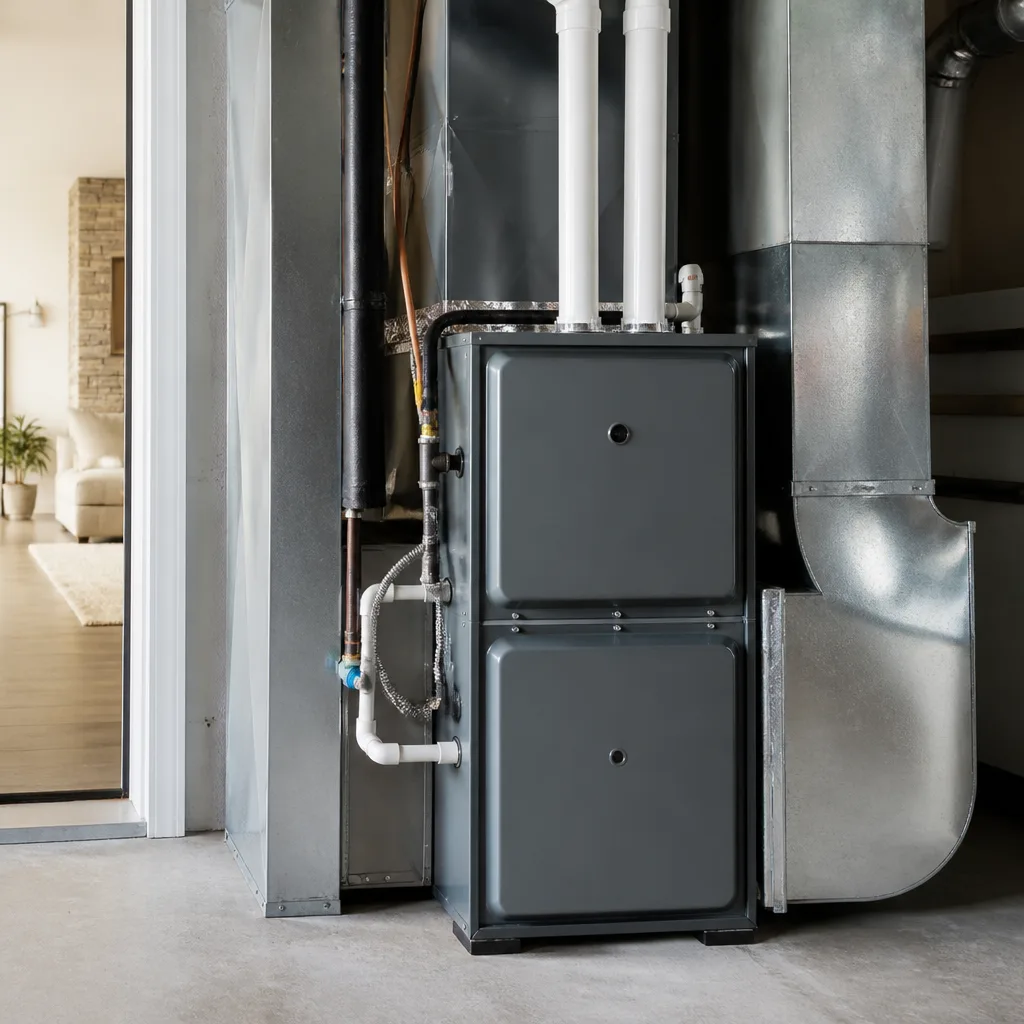
 Furnace & heating
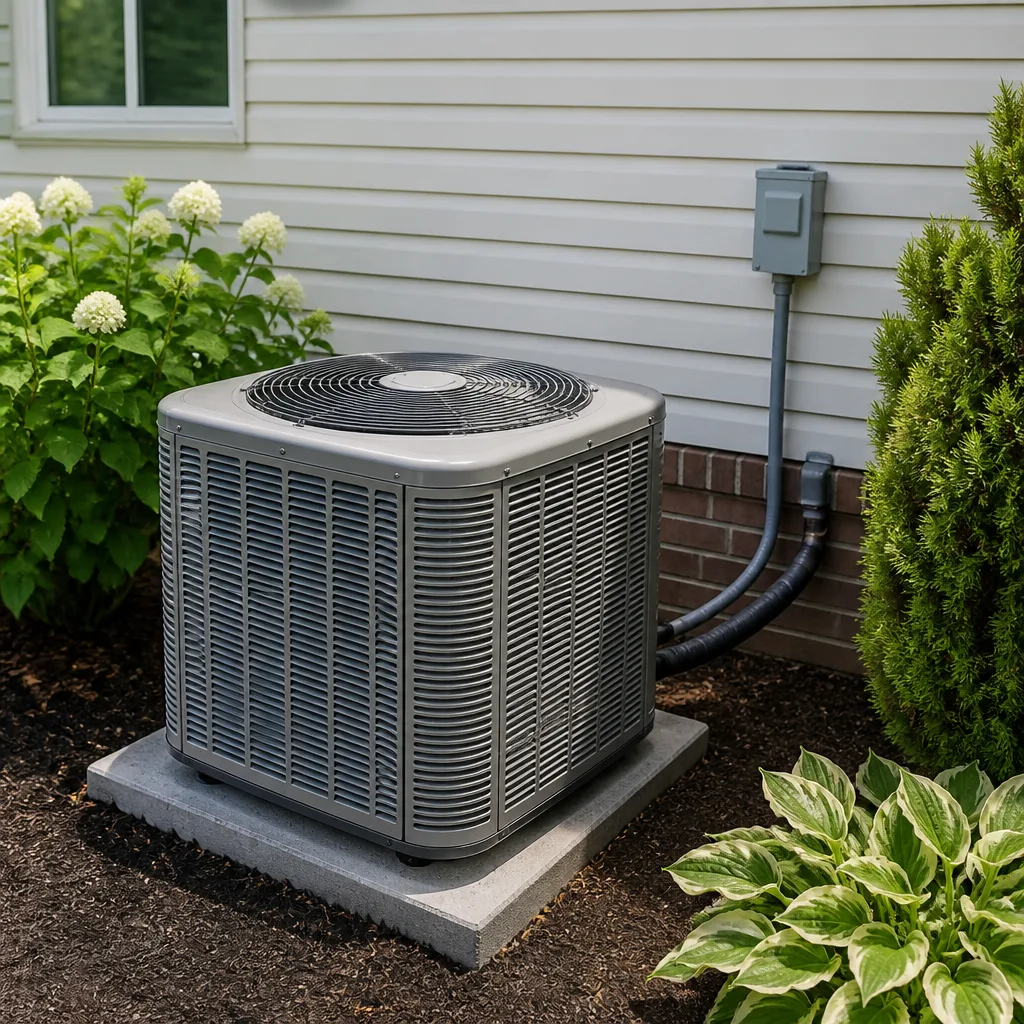 AC repair
 Heat pumps
 Ductless mini splits
 Carrier
 Trane
Trane Goodman
Seasonal tune-up and full diagnostic on your Carrier, Trane, or Goodman system - readings shown to you before any repair is proposed
Diagnosis first, numbers second - you approve the repair price before a single part goes in.
Get your free estimateCarrier Capacitor Replacement: The Yonkers Owner’s Guide
A Carrier capacitor replacement in Yonkers typically runs between $150 and $400 installed, depending on whether you need a single or dual-run capacitor and which Carrier series you have. We stock Carrier-compatible capacitors on our trucks and can usually complete the swap the same day you call. The capacitor is a small cylinder inside your outdoor unit that stores and releases the electrical jolt needed to start the compressor and fan motor – when it weakens, your AC either hums without starting or shuts down intermittently, usually on the hottest afternoons when you need it most.
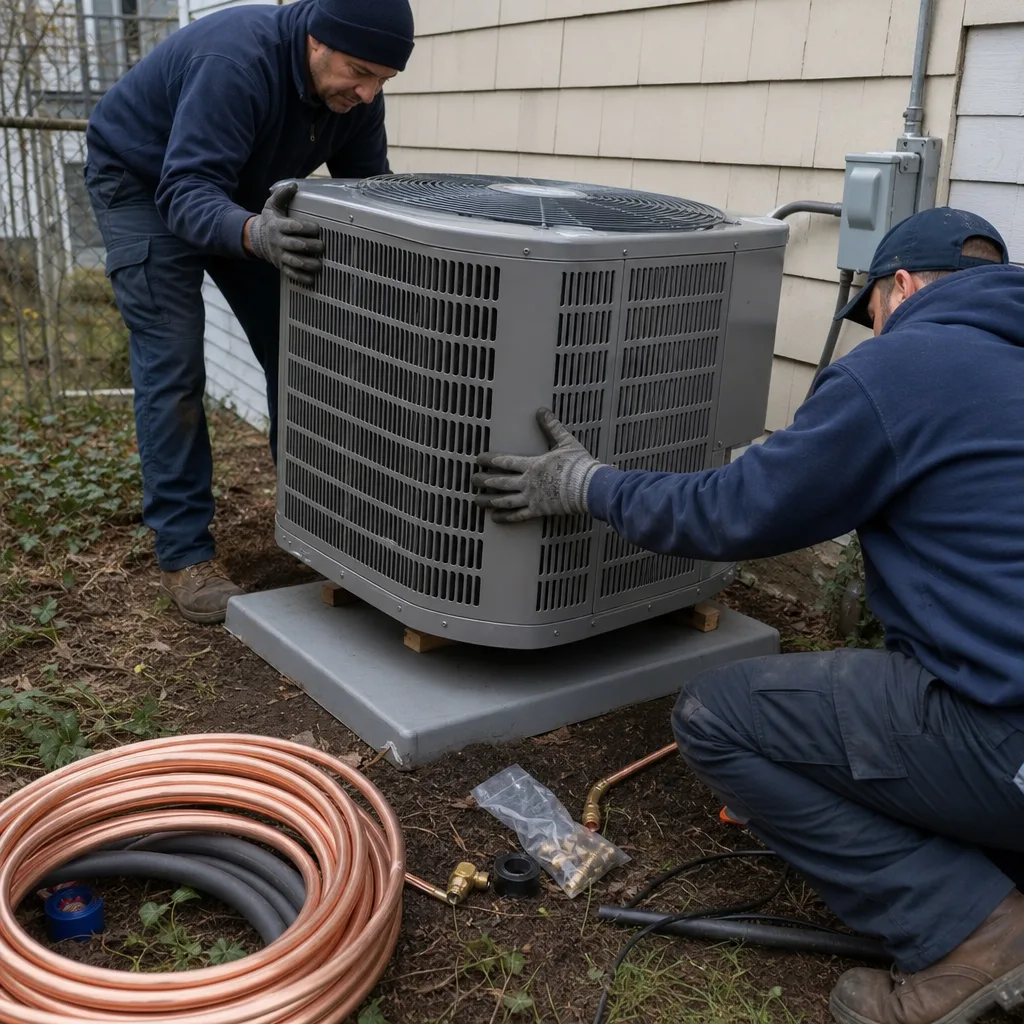
Most homeowners discover a failed capacitor the hard way: the thermostat clicks on, the indoor blower runs, but the outdoor unit just sits there buzzing. That buzz is the compressor trying to start without enough stored voltage. Andre Fuller has walked up to more Yonkers driveways than he can count and heard that exact sound before he even opens his tool bag.
Which Carrier Models This Applies To
Carrier uses capacitors across nearly every residential AC and heat pump line, but the part itself varies by series and capacity. The Comfort, Performance, and Infinity series all use different microfarad (µF) ratings, and matching the wrong one causes the motor to overheat or fail to start. The µF number is printed right on the capacitor’s metal casing – something like “45/5 µF” or “35/5 µF” – and that number matters more than the model name on the side of your unit.
Here is the compatibility gotcha most parts sites will not tell you: Carrier has used both oval and round capacitor form factors across the same nominal tonnage, and the mounting bracket is not universal. A 3-ton Comfort 14 from one year may take a round 45/5, while the same model two years later takes an oval. We identify the exact part by reading the label before we ever quote a price.
On the OEM versus aftermarket question: Carrier-branded capacitors are fine parts, but they are made by third-party manufacturers like AmRad and Titan anyway. A quality American-made capacitor rated for the same µF and voltage will perform identically and often outlast the factory part. We stock both options and will always tell you the price difference before ordering anything.
Styles & brands we work with
Signs Your Carrier Capacitor Replacement Is Failing
- Outside unit hums but does not start. The capacitor has lost enough charge that it cannot kick the compressor over, even though power is reaching the unit. This is the classic capacitor failure sound and the most common reason we get called to Yonkers homes in July and August.
- AC runs for a while, then the outdoor fan stops while the compressor keeps going. A dual-run capacitor feeds both the fan and compressor; when one side of it dies, the fan quits first. The compressor then overheats and trips its internal overload, which shortens its life.
- The outdoor unit starts only with a “push start” when you tap the fan blade. If you have to manually spin the fan to get the motor going, the capacitor is not delivering enough torque, and we would not recommend doing that repeatedly.
- Visible bulging, leaking oil, or a burnt electrical smell at the outdoor unit. Capacitors are sealed metal cans filled with dielectric fluid. When they fail, the top dome or sides bulge outward; a stronger failure leaks that fluid and smells acrid.
- Energy bills tick up while cooling gets weaker, especially in older Carrier units. A weak capacitor makes the compressor draw more current while producing less cooling effect. This also stresses the start winding and can damage the compressor if ignored for a full season.
See the difference
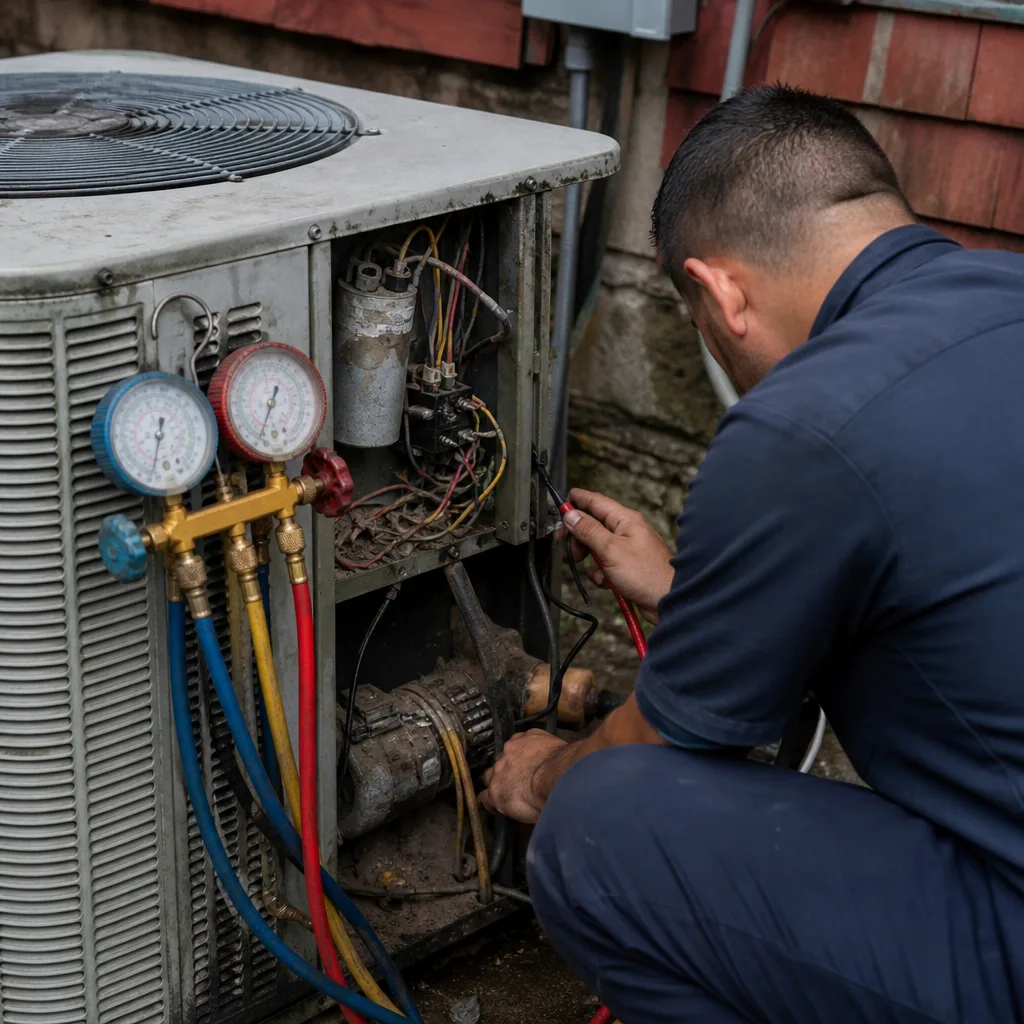 Before
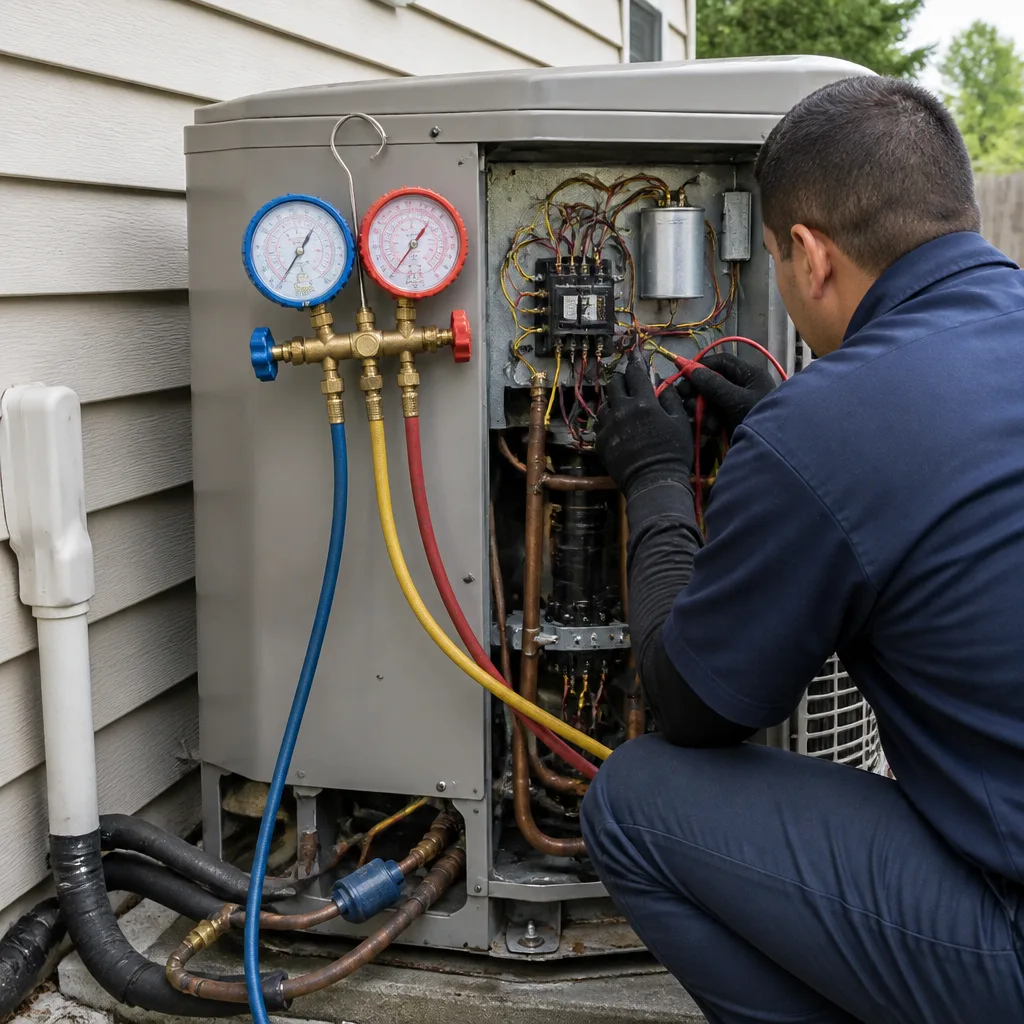 After
After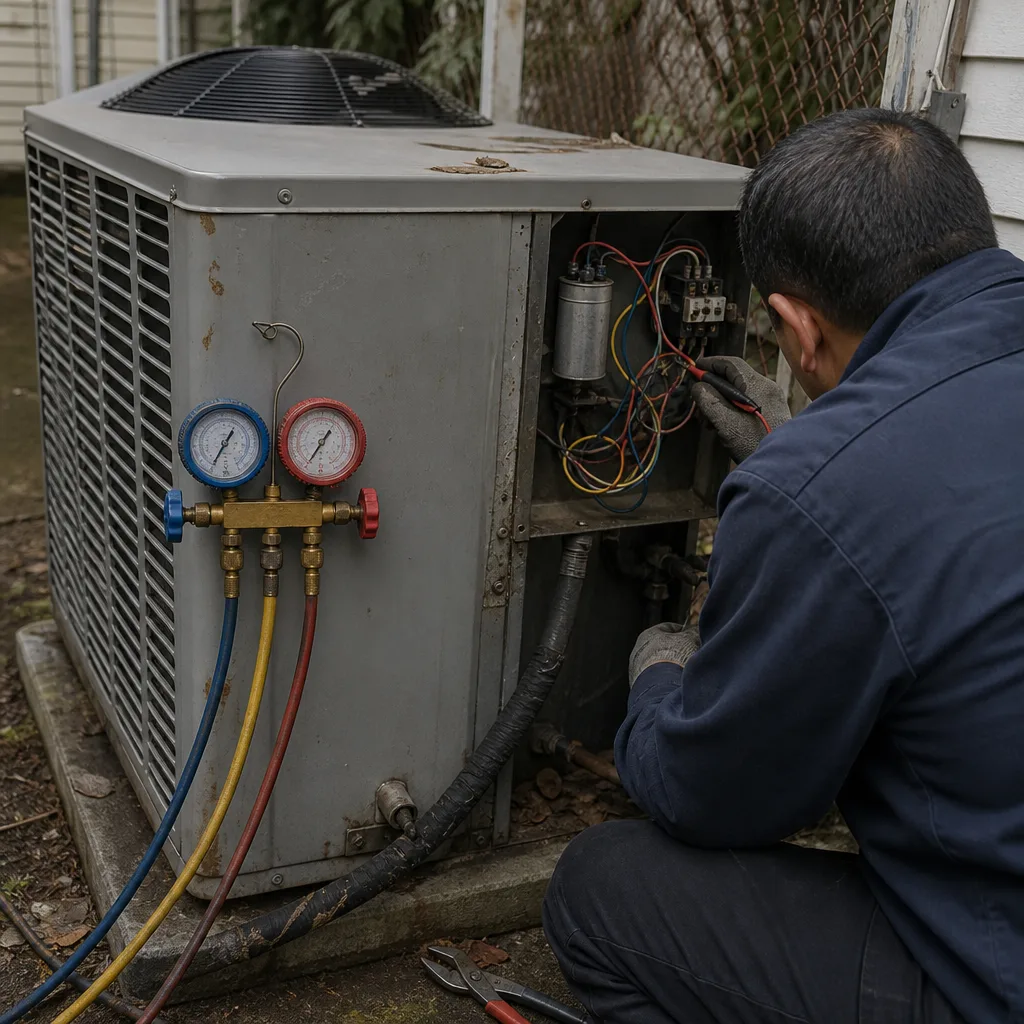 Before
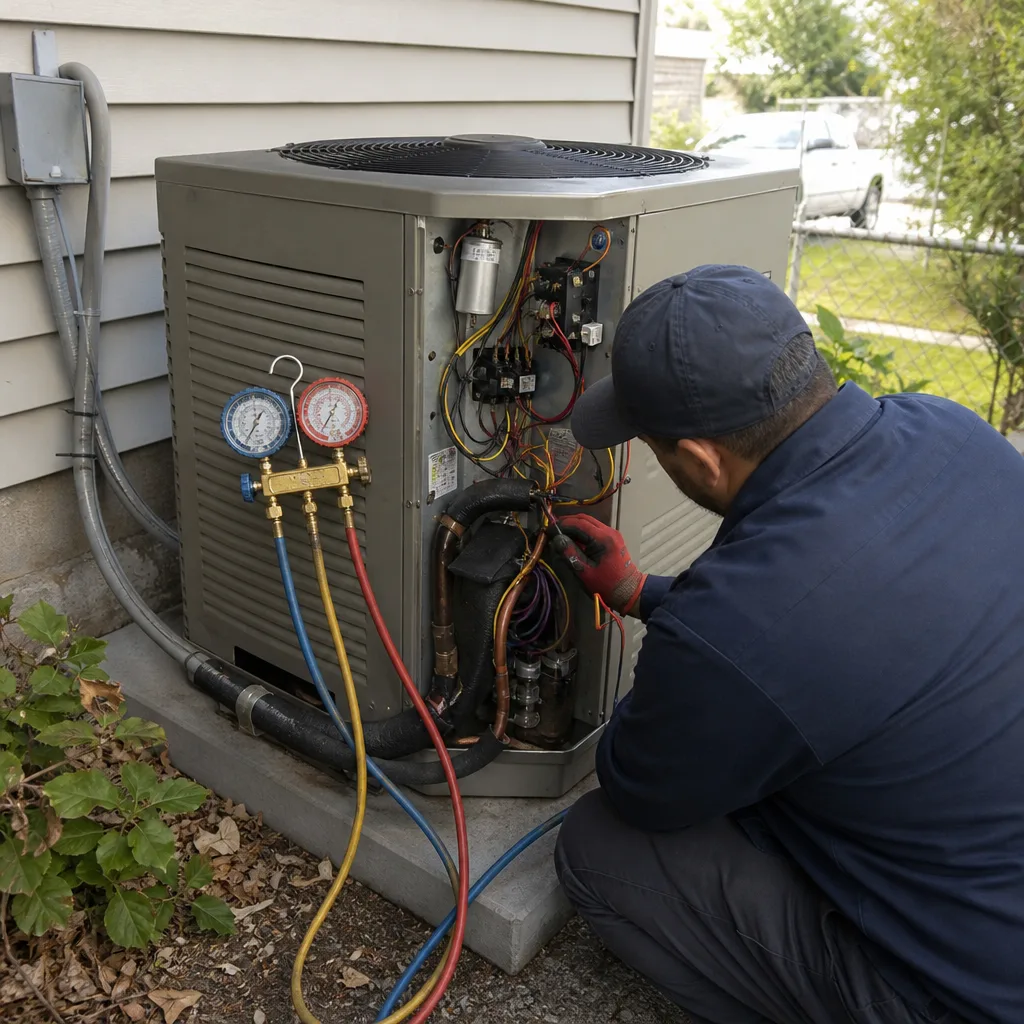 After
After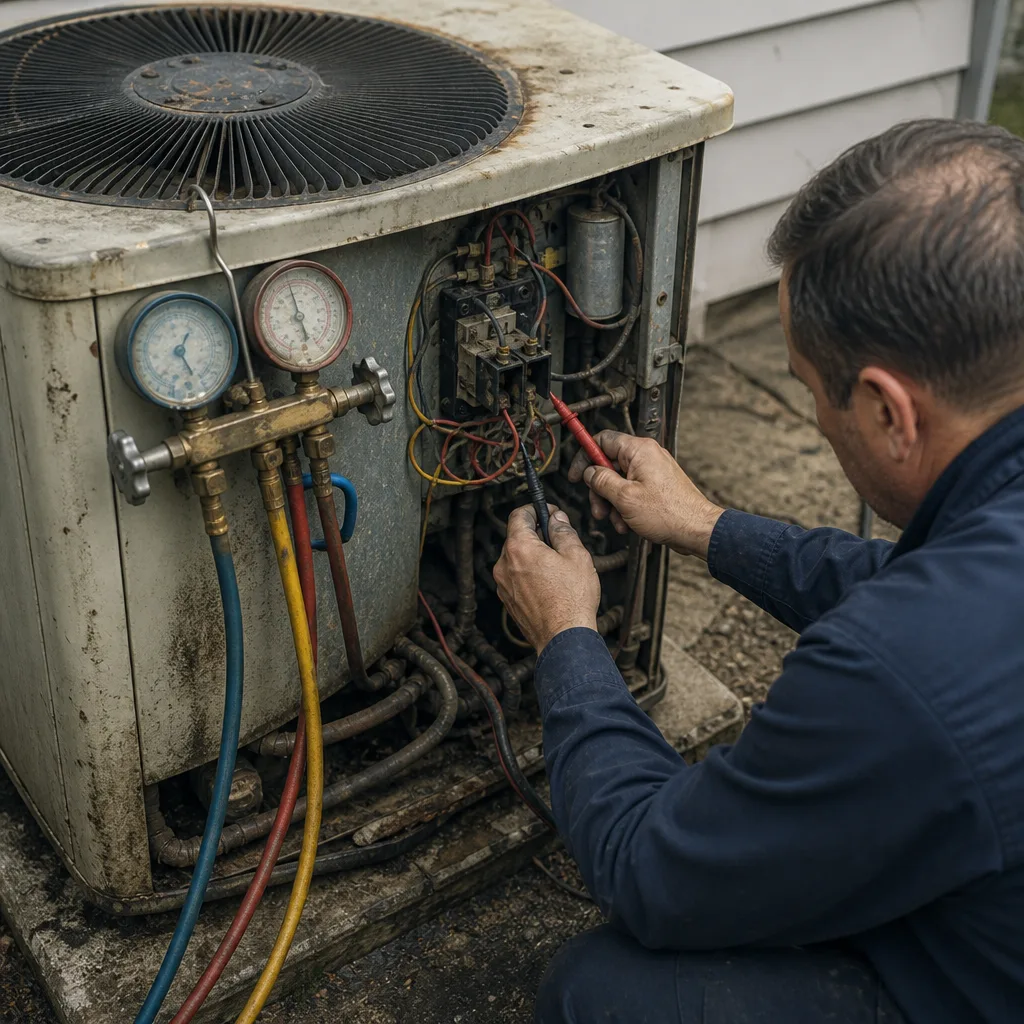 Before
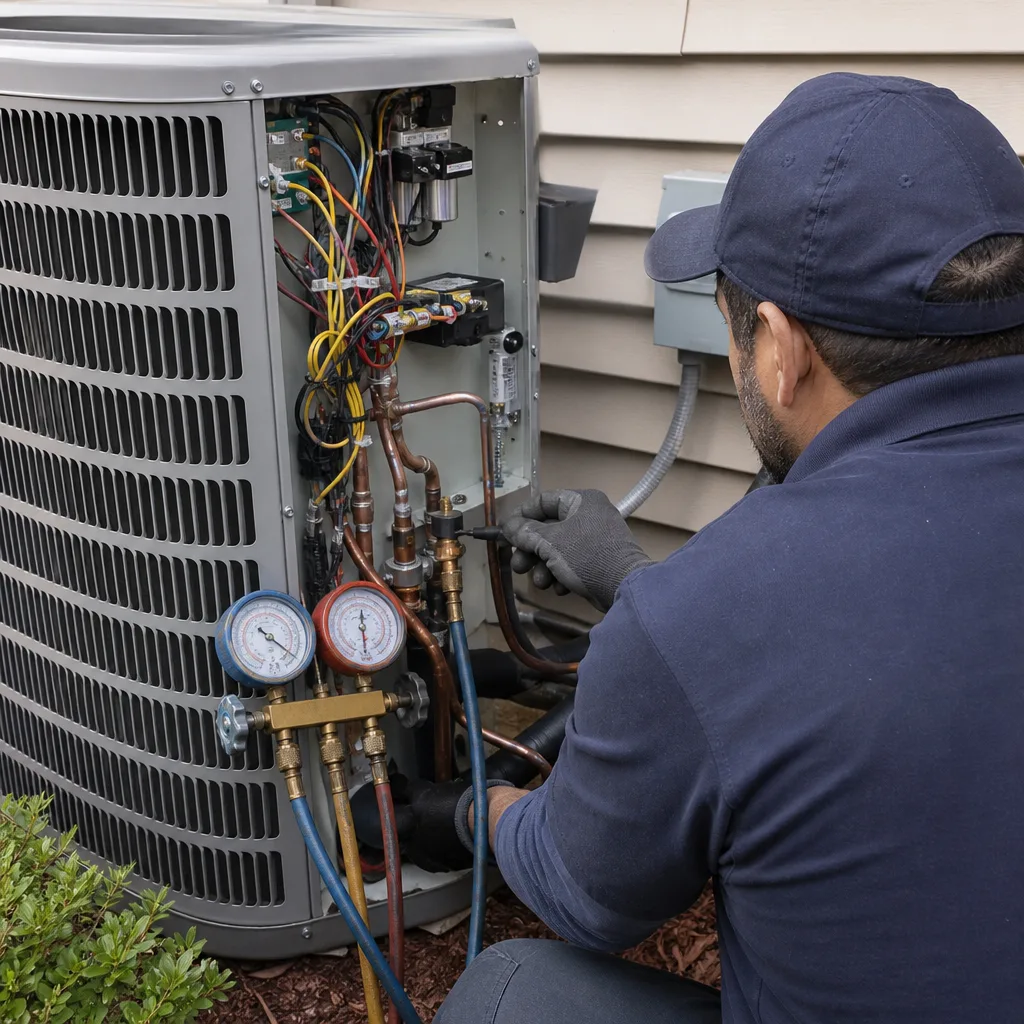 After
AfterReplacement Cost & What’s Included
Most Carrier capacitor replacements in Yonkers fall into the $150 to $400 range for the full visit, which includes the service call, the part itself, and the labor. A basic single-run capacitor on a smaller unit lands on the low end; a dual-run capacitor on a larger Carrier Infinity system, especially if it requires a hard-start kit alongside, lands on the high end. Our pricing follows the standard Halden approach: the written price lands in your hands before any work starts.
Here is how the cost typically breaks down:
- Service call and diagnosis: $80 to $120
- Capacitor part cost: $20 to $90 depending on µF rating and whether we install OEM or a quality aftermarket equivalent
- Labor to test, swap, and verify: $50 to $190
- Optional hard-start kit (recommended for older Carrier compressors): $40 to $80
Every repair includes our written guarantee on the work and the part. If that capacitor fails within the coverage window, we come back and replace it at no charge – automatically, without you having to argue for it. That is the 365-Day Done Right Promise working the way it should.
DIY or Call Us?
Capacitors store a dangerous electrical charge even after the power is off at the breaker. The terminals can hold enough voltage to knock you across a driveway, which is why we never hand a homeowner a wrench and say “good luck” on this one. Honestly, that is the safety divide: you can safely look at the capacitor and read its label, but discharging it and swapping it live is where DIY goes wrong, and it goes wrong fast.
What you can safely do before calling: check your breaker, look at the capacitor through the unit’s access panel for visible bulging or oil, and write down the µF rating and the Carrier model number from the data plate. Those two pieces of information let us quote an exact price over the phone and arrive with the right part already on the truck. If the capacitor looks fine and you still want an expert set of eyes on it, that is exactly what we are here for. Call (838) 213-7827 and we will get you on the schedule with a live arrival time you can track to your door.
FAQs
A Carrier capacitor lasts 5 to 10 years in Yonkers, but Hudson Valley heat waves and voltage fluctuations from the local grid can shorten that to as little as 3 or 4 years on units that run hard every summer. If your capacitor is older than 7 years and your AC has been behaving strangely, it is worth testing before it fails completely.
No, a capacitor cannot be repaired – once the dielectric fluid breaks down or the internal winding shorts, the part is done and replacement is the only correct fix. Attempting to “revive” one is unsafe and will leave you with the same intermittent failure within days.
A capacitor swap takes 30 to 45 minutes on most Carrier units, including testing the old part, confirming the µF match, installing the new one, and verifying the compressor and fan both start properly. Add a little time if we are also installing a hard-start kit, which we recommend on older compressors.
Yes, our trucks carry the most common Carrier capacitor ratings, including 35/5, 40/5, 45/5, and 50/5 dual-run capacitors plus single-run fan capacitors, so most replacements can happen on the first visit. If your Carrier needs an uncommon rating, we source it locally in Westchester the same day. Call (838) 213-7827 and tell us the µF number from your capacitor label – we will confirm whether it is on the truck before we even roll.
Written by Andre Fuller, Owner, Halden Heating and Air Yonkers at Halden Heating and Air Yonkers, serving Yonkers and nearby areas.