
Last updated October 16, 2026
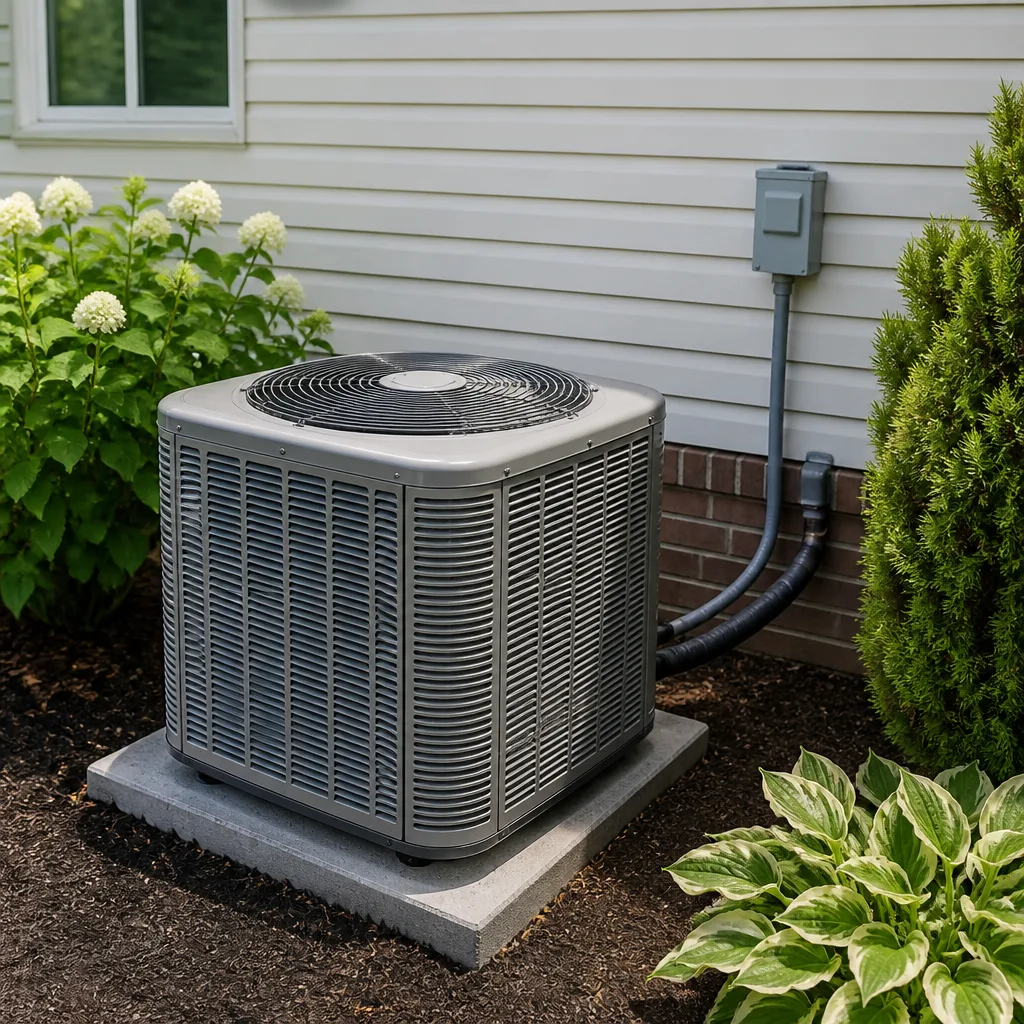 AC repair
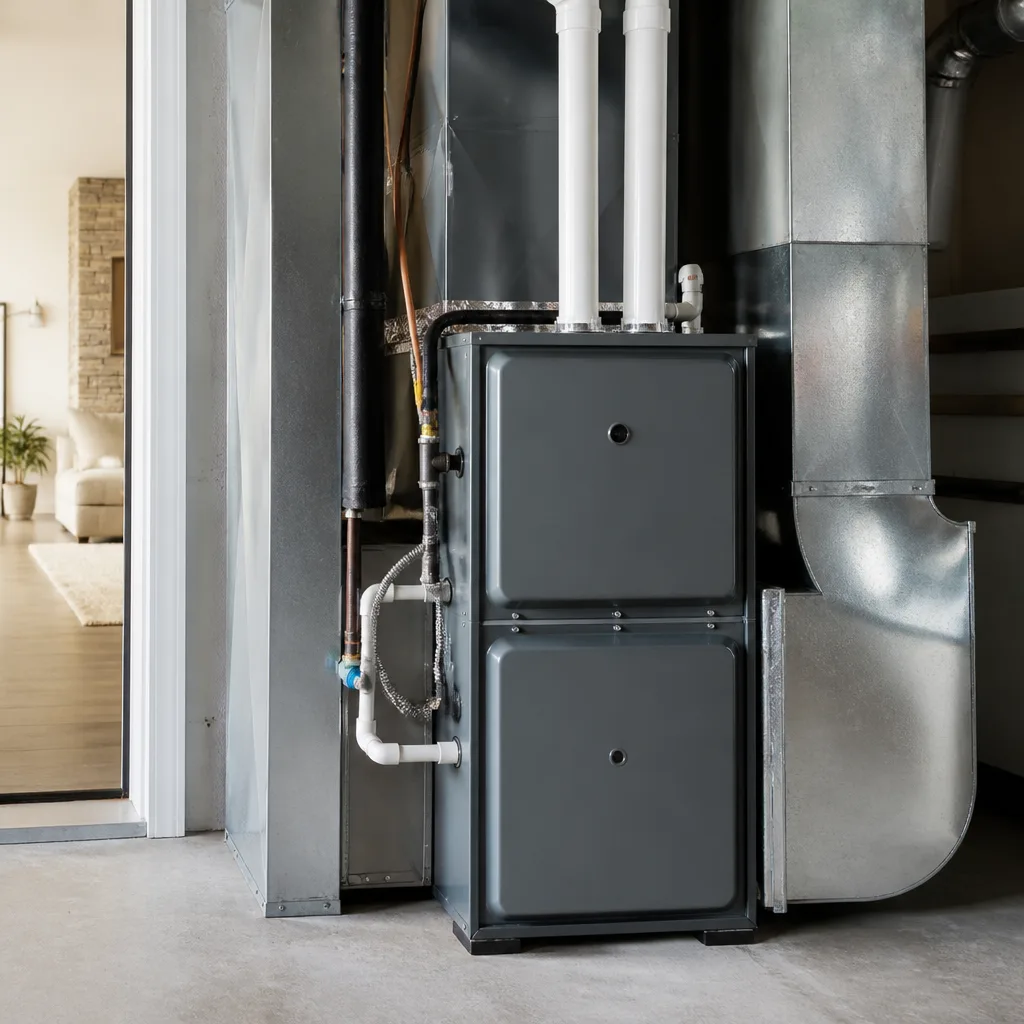 Furnace & heating
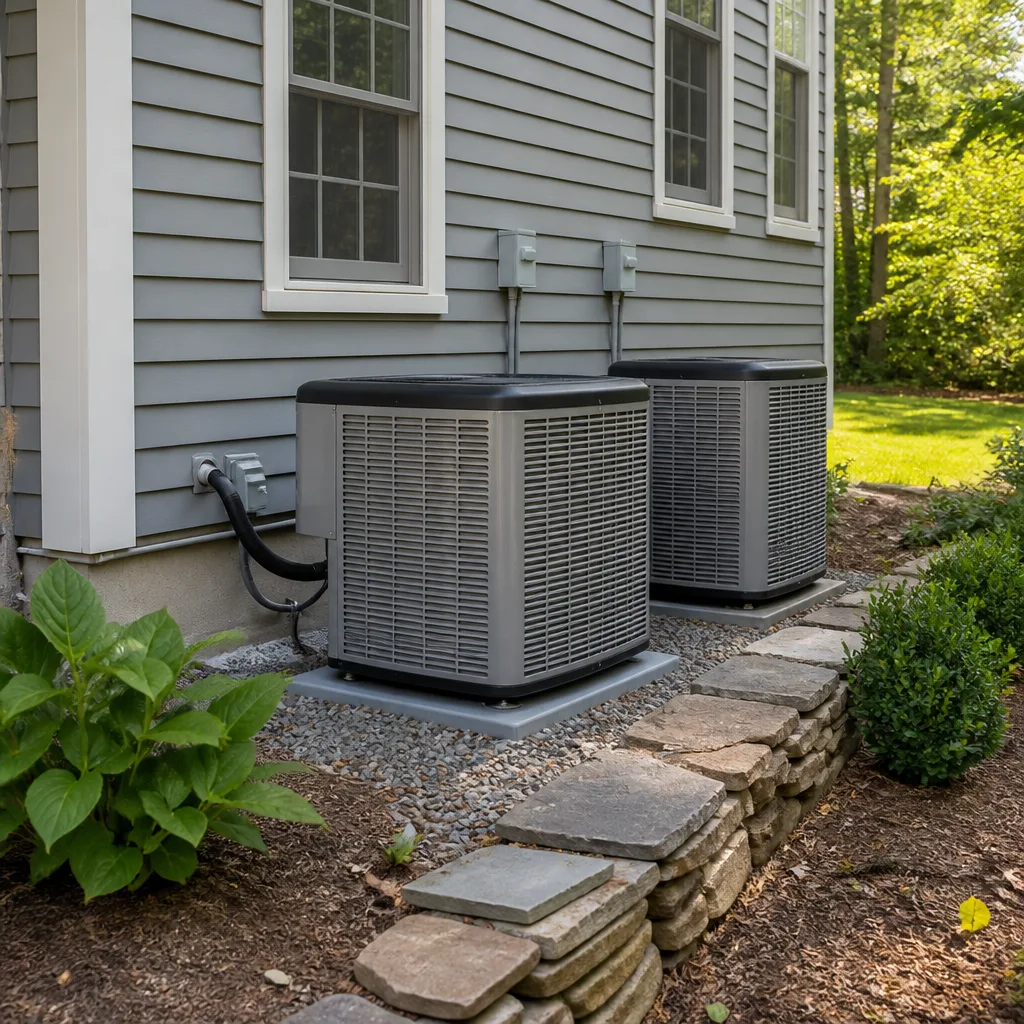 Heat pumps
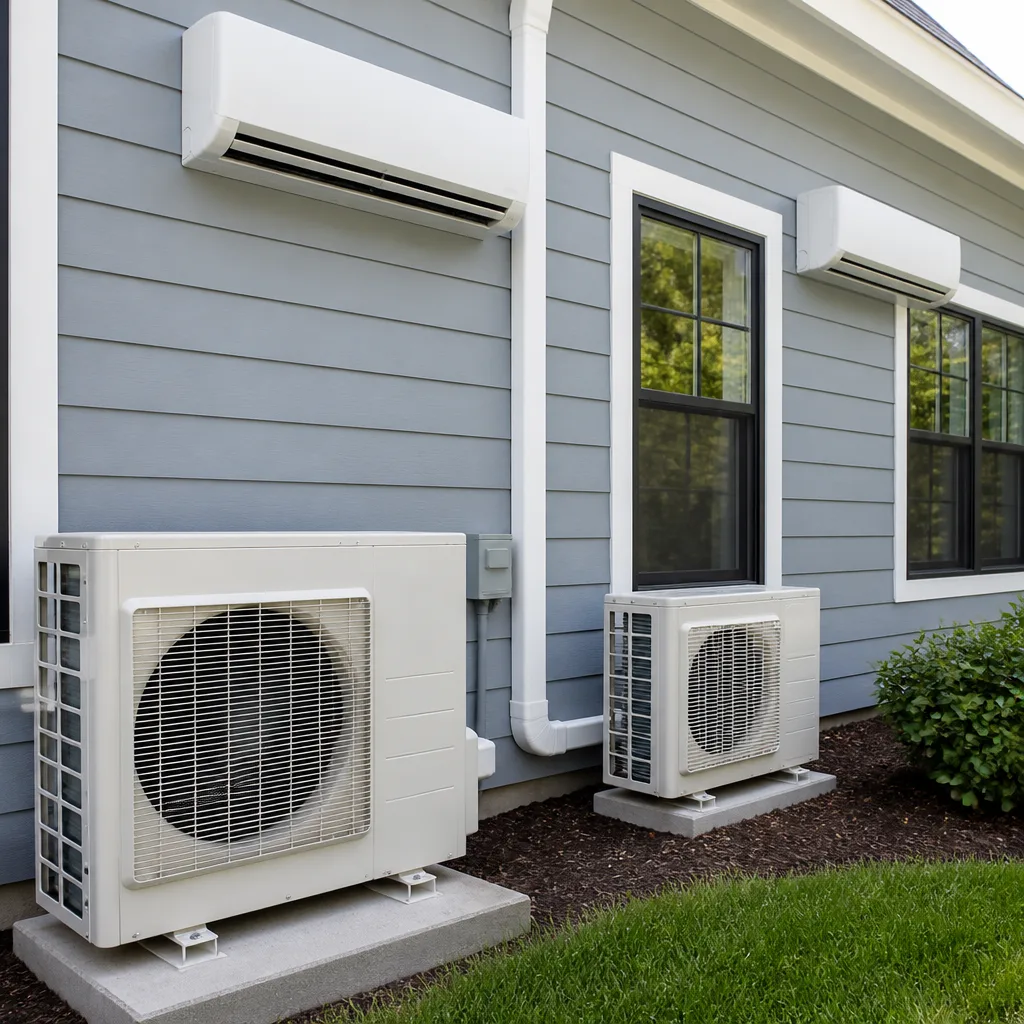 Ductless mini splits
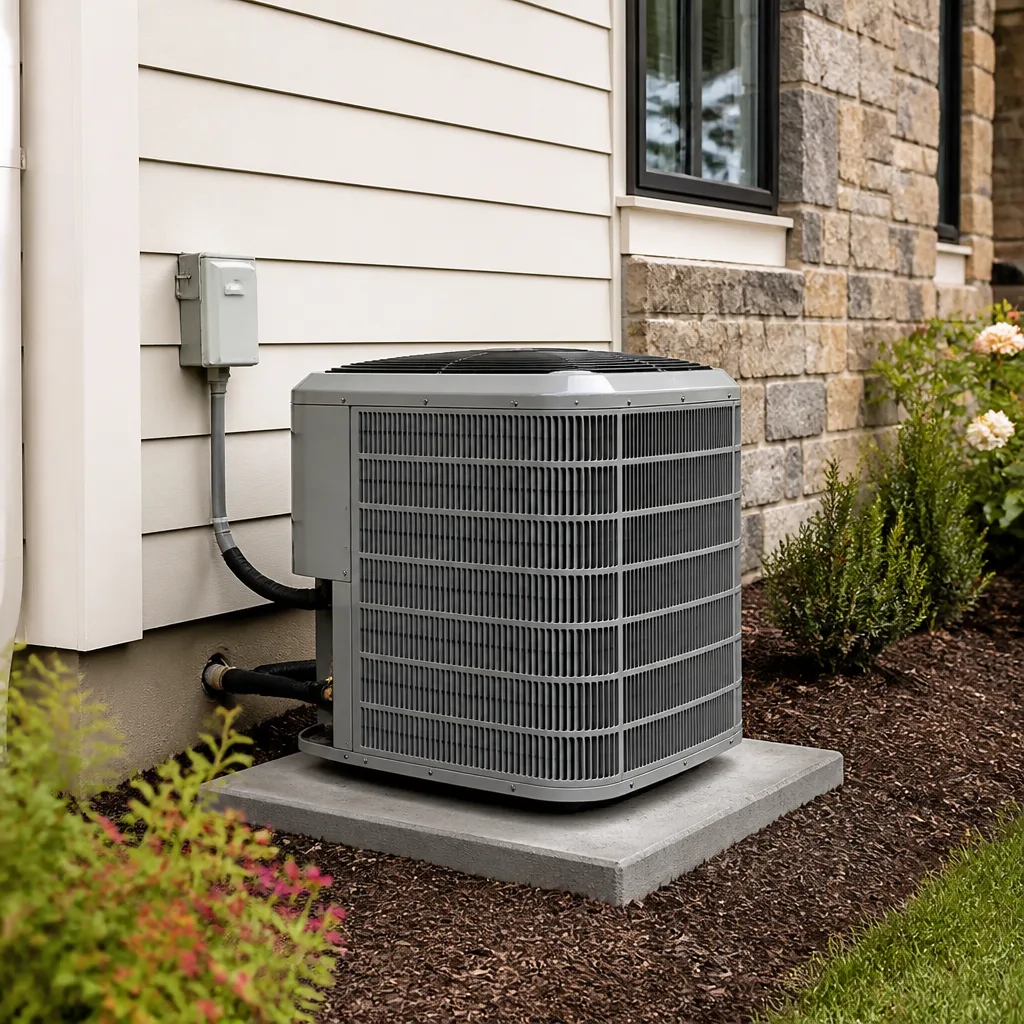 Carrier
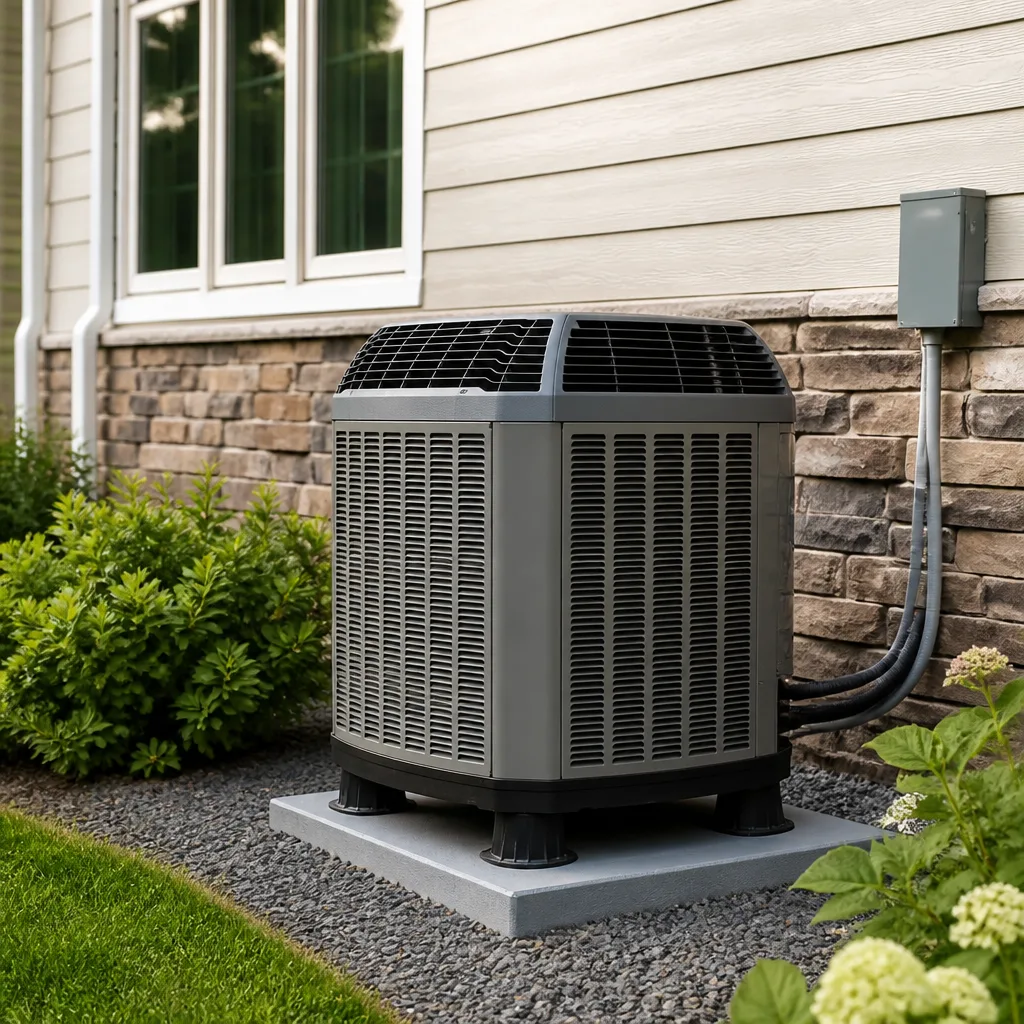 Trane
Trane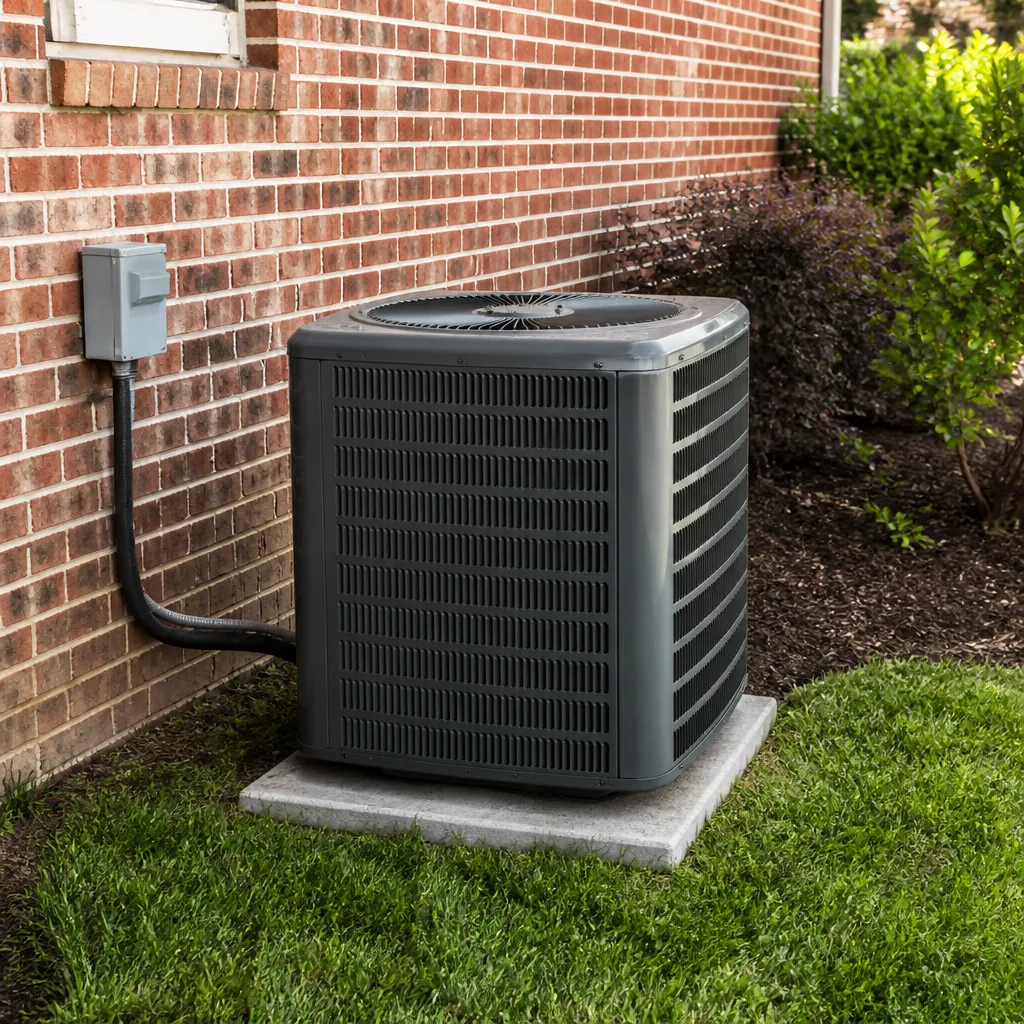 Goodman
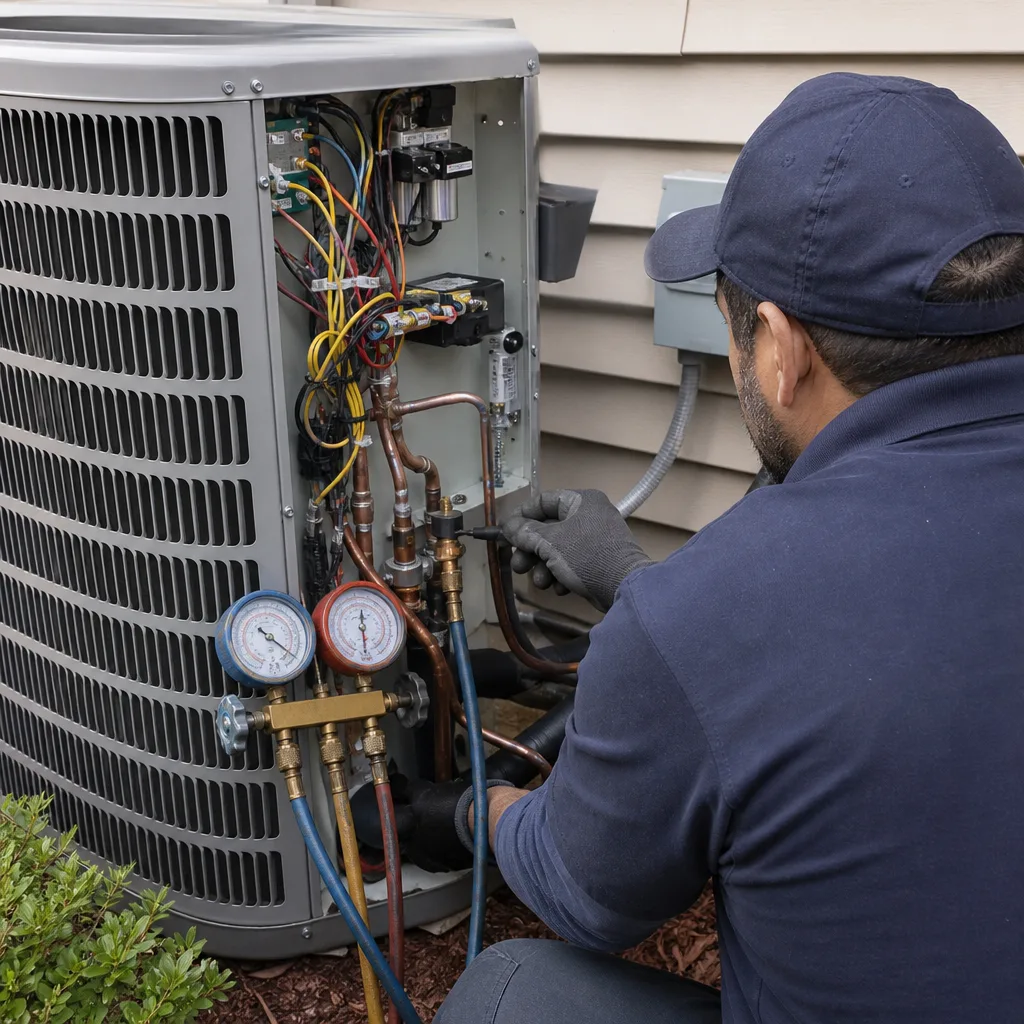
Seasonal tune-up and full diagnostic on your Carrier, Trane, or Goodman system - readings shown to you before any repair is proposed
Diagnosis first, numbers second - you approve the repair price before a single part goes in.
Get your free estimateThe Complete Guide to HVAC in Yonkers
A brand-new central AC system installed in a 1920s Yonkers Tudor without a duct assessment can fail within three summers. It happens constantly here, because the house was built for steam heat, not ducted air, and the contractor didn’t want to lose the job by saying so. This guide is built for homeowners who’d rather not learn that lesson the expensive way. We’ll walk you through how Yonkers housing stock, our odd river-and-ridge micro-climates, Westchester rebate programs, and city permit rules all shape what heating and cooling should actually cost and look like here. If you live in Yonkers and want real numbers, real system types, and real local context, this is the one guide that covers all of it.
Quick Answer
The right HVAC system in Yonkers depends almost entirely on the era your home was built. Pre-war co-ops and Tudors typically need mini-splits or carefully assessed duct retrofits, post-war colonials can often support straightforward central air, and newer riverfront buildings are sized for modern heat pumps. Costs for full-system work in Yonkers generally range from $4,500 for a basic ducted AC replacement to $18,000+ for a cold-climate heat pump with new ductwork, with most repair calls landing between $150 and $500.
Styles & brands we work with
Table of Contents
- Why Yonkers Housing Stock Dictates Your HVAC System
- Yonkers Micro-Climates: River Level vs. Ridge Neighborhoods
- System Types That Make Sense in Yonkers Homes
- What HVAC Work Actually Costs in Yonkers in 2026
- Westchester and Con Edison Rebate Programs You’re Leaving on the Table
- Yonkers Building Permit Requirements That Surprise Homeowners
- How to Read an HVAC Contractor’s Quote in Yonkers
- Common Mistakes to Avoid
Why Yonkers Housing Stock Dictates Your HVAC System
Yonkers is not one housing market. It’s at least five distinct eras stacked on top of each other, and each one demands a different approach to heating and cooling. The pre-war co-op buildings along South Broadway and Warburton Avenue were built between 1900 and 1929, mostly with steam radiators and no ductwork at all. The post-war colonials and capes that filled Crestwood, Lincoln Park, and much of the east side between 1945 and 1970 were built with forced-air oil or gas furnaces, which means ductwork exists but is often undersized by modern AC standards. Then you have the 1980s and 1990s split-levels and center-hall colonials in neighborhoods like Lawrence Park and the newer townhome developments near the river. Each era has a default system type, and forcing a different one onto the wrong house is where most Yonkers HVAC disasters begin.
Here’s the reality in our experience: a 1920s co-op on North Broadway with steam heat and no ducts is not a candidate for central air, no matter how attractive the quote looks. The correct answer there is almost always a ductless mini-split system or a high-velocity small-duct system, which we’ll cover in detail below. The post-war colonial on a quiet street off McLean Avenue, by contrast, already has a furnace and ducts. That home can often take a standard central AC add-on without major surgery. Knowing which house type you have before you call a contractor in Yonkers will save you from being sold the wrong system, which is a specific, expensive mistake we see several times every season.
Yonkers Micro-Climates: River Level vs. Ridge Neighborhoods
Here’s something most HVAC guides skip entirely: Yonkers has meaningful temperature and humidity differences from one neighborhood to the next. The Hudson River keeps the low-lying areas, like Getty Square, Ludlow, and the downtown waterfront, several degrees cooler in summer but noticeably more humid. That humidity is the cooling-load killer. A house in Ludlow at 80 degrees with 75% humidity needs a very different AC setup than a house up in Park Hill or Colonial Heights at 85 degrees with 55% humidity. The river-level home needs dehumidification as much as cooling, which means variable-speed equipment or a dedicated dehumidification strategy matters more than raw tonnage.
The ridge neighborhoods, including Park Hill, Colonial Heights, and the higher parts of Bryn Mawr, sit 200 to 400 feet above the river. Up there, summers run hotter and drier, and winter winds hit harder. That north-facing ridge exposure adds real heating load in January and February. A furnace sized for a sheltered river-level home will not keep up on a hilltop corner lot when the wind is coming off the Palisades. When Andre Fuller and his team size equipment for these areas, they treat a Park Hill colonial differently from a Ludlow rowhouse, even if the square footage is identical. That local load calculation is the difference between a system that holds temperature and one that runs constantly while never quite catching up.
System Types That Make Sense in Yonkers Homes
The four main system types you’ll encounter in Yonkers are steam or hydronic heat, forced-air central, ductless mini-split, and heat pump systems. Each maps to specific housing eras, and mixing the wrong one with the wrong house is where the costly mismatches occur.
Steam and Hydronic Heat (Pre-War Homes)
Built from roughly 1900 through the 1930s, most pre-war Yonkers buildings use steam radiators or hot-water baseboards. These are exceptional heating systems when maintained, but they offer zero cooling, and the homes that have them almost never have ductwork. Installing central AC in a home like this means either opening walls and ceilings to run ducts or switching to a different approach entirely. We strongly recommend homeowners in this situation look at ductless mini-splits first. They deliver cooling where it’s needed without destroying original plaster and trim, and modern cold-climate mini-splits can handle the heating side too, often replacing the boiler entirely.
Forced-Air Central (Post-War Homes)
The colonials, capes, and ranches built from 1945 through the late 1970s in neighborhoods like Crestwood, Mohegan Heights, and Lincoln Park generally have forced-air systems. Ducts are present, which makes central AC a real option. But here’s the catch we see constantly: those ducts were sized for heat only. Heating air needs to move about 400 cubic feet per minute per ton, and cooling needs the same. The problem is that many of those 1950s and 1960s duct runs are undersized for the AC tonnage the home actually requires. A reputable contractor in Yonkers will assess duct size before quoting a central AC project, not after the new unit has been installed and the airflow is too weak to cool the top floor. For help choosing the right pro, see our guide on How to Hire a HVAC Contractor in Yonkers: A Step-by-Step Guide.
Ductless Mini-Split Systems (All Eras)
Mini-splits work in nearly every Yonkers housing type, from the pre-war co-op with no ducts to the post-war colonial with a finished attic that never got a supply register. They’re the fastest-growing AC option in Yonkers because they solve the no-duct problem without demolition. A typical single-zone mini-split install in Yonkers runs $3,800 to $6,500, while a whole-home multi-zone setup with four or five indoor heads can run $12,000 to $18,000 depending on the layout. They’re not the cheapest option, but they’re often the only clean answer for older Yonkers homes.
Heat Pump Systems (Modern and Retrofit)
Cold-climate heat pumps have finally gotten good enough for Yonkers winters. A modern unit from Carrier, Bryant, or Trane can extract heat from outdoor air down to single-digit temperatures, which means you can often replace both your AC and your furnace with one piece of equipment. Heat pumps are particularly appealing in Yonkers because Con Edison’s electric rates are high but not brutal, and the utility rebates for heat-pump conversions are currently the most generous they’ve ever been. More on that below. The catch is that heat pumps are picky about duct sizing, and in older Yonkers homes without ducts, they’re really only practical as mini-split systems. A full heat-pump conversion with new ductwork in a pre-war home can push past $20,000, so the math has to work.
What HVAC Work Actually Costs in Yonkers in 2026
Every homeowner wants the number. Here’s the honest, itemized version-our full HVAC Cost Breakdown: The Yonkers Homeowner’s Reference for 2026-of what we see across Yonkers right now, based on 2026 pricing for the housing stock and local market conditions here.
- AC repair: Most AC repair calls in Yonkers run between $150 and $500 depending on the part. A bad capacitor or a failed fan motor is on the lower end. A refrigerant leak that needs locating, sealing, and recharging (topping off the coolant your system needs to produce cold air) can land between $400 and $900, especially if the system uses the older R-22 refrigerant that now costs significantly more per pound.
- Furnace repair: Furnace repair calls typically run $180 to $550. Igniter failures, flame sensors, and pressure switches are the common culprits in Yonkers homes. A cracked heat exchanger is a different story entirely, and if that’s the diagnosis, you should get a replacement quote, not a patch.
- AC installation (replacement, ducted): Full central AC replacement in a Yonkers home with existing ductwork runs $4,500 to $9,500 for a standard efficiency unit, and $8,000 to $14,000 for a high-efficiency variable-speed system from a brand like American Standard or Carrier.
- Furnace replacement: Efficient gas furnace replacement runs $4,000 to $8,000 installed, depending on AFUE rating and whether the flue needs upgrading. Yonkers has plenty of older 80% AFUE furnaces still running, and swapping those for 96% AFUE condensing models is one of the most common jobs we do in Crestwood and Lincoln Park.
- Heat pump conversion (no new ducts): $8,000 to $16,000 for a ducted heat pump replacing both furnace and AC on existing ducts. Higher if you’re converting from steam or hot water heat and need air handlers or mini-splits added.
- Mini-split, single zone: $3,800 to $6,500 installed. Multi-zone systems scale from there.
- Ductwork: Partial duct replacement or addition of two to three new supply runs in a Yonkers colonial runs $1,200 to $3,000. Full duct design and install in a home with no existing ducts starts at $10,000 and goes up quickly depending on access.
These are real Yonkers market ranges, not national averages. The national numbers you’ll find on generic HVAC sites are lower because they blend in markets where labor and permitting are cheaper. Westchester County labor rates and Yonkers building department requirements add meaningfully to the final number. For an exact quote on any of these scopes, call Halden Heating and Air Yonkers at (838) 213-7827. Every estimate includes a written price before any work starts, and you’ll never hear a higher number at the door than what you saw on paper.
Westchester and Con Edison Rebate Programs You’re Leaving on the Table
Yonkers homeowners have access to utility rebate programs that many contractors never mention, either because they don’t know the current details or because the paperwork annoys them. Here’s what’s actually available right now and how to claim it.
- Con Edison heat pump incentives: Con Edison is currently paying substantial rebates for ducted and ductless heat pump installations, with amounts that scale by system capacity and efficiency. A whole-home cold-climate heat pump in a Yonkers single-family home can qualify for $1,500 to $3,500 or more, depending on the specific equipment and whether you’re replacing electric resistance heat or oil.
- Con Edison smart thermostat rebates: If you’re installing a qualifying smart thermostat along with your new system, Con Edison typically offers a $50 to $100 rebate. It’s not life-changing money, but it’s free to claim.
- National Grid gas furnace rebates: Homes in Yonkers that heat with natural gas and switch from an 80% AFUE furnace to a 96% AFUE or higher condensing model can qualify for National Grid rebates, typically in the $300 to $600 range depending on the exact AFUE rating and equipment type.
- Federal tax credits: The 2026 federal tax credit for qualifying heat pump installations is still significant. You can claim a credit worth 30% of the installed cost up to $2,000 for eligible heat pumps and heat pump water heaters. This stacks with whatever Con Edison pays.
- How to actually claim these: The contractor you hire should provide the paperwork, including the AHRI certificate for the exact equipment installed and the dated invoice. You fill out Con Edison’s online rebate application at their residential rebate portal, and you claim the federal credit when you file taxes using IRS Form 5695. Keep every document. We’ve seen Yonkers homeowners lose out on $2,000 in credits because the contractor never handed over the AHRI certificate.
The key thing to know: these rebates are claimed by you, not automatically by the contractor. Some contractors will offer to handle the paperwork, and you should take them up on it, because the process is fiddly. But never assume a rebate was actually filed until you see the confirmation from Con Edison or National Grid.
Yonkers Building Permit Requirements That Surprise Homeowners
Any HVAC installation in Yonkers that involves new equipment, new ductwork, or a fuel type change requires a building permit from the City of Yonkers Department of Housing and Buildings. This surprises homeowners who assumed a like-for-like AC replacement was just a swap. It’s not. Yonkers requires permits and inspections for most HVAC work beyond basic repairs, and unpermitted work can complicate a future home sale when the buyer’s inspector flags the missing permits.
The specific scenario that catches people off guard is the oil-to-heat-pump conversion. Yonkers has a substantial number of homes that still heat with oil, particularly in the post-war neighborhoods east of the Saw Mill River Parkway. Switching from an oil boiler to a ductless heat pump system means the old oil tank has to be properly abandoned or removed, which is its own permit and inspection process with the county health department. A homeowner who skips this step can end up with a decommissioned oil tank that becomes a headache at closing. The good news is that any licensed contractor working in Yonkers regularly knows these permits, and you should expect the permit cost to be itemized on your quote. If the quote doesn’t mention permits at all, ask why.
How to Read an HVAC Contractor’s Quote in Yonkers
We see quotes from other Yonkers contractors every week, and most of them share the same three padded line items. Here’s how to spot them before you sign.
- Vague “labor” or “installation” line: A quote that says “Labor: $4,200” without breaking down what that labor includes is hiding something. A proper quote should itemize the scope of the labor separately from each material line so you can see exactly what you’re paying for. If the labor line is suspiciously large and vague, ask for a scope-of-work breakdown. If they can’t provide one, that’s a red flag.
- Unspecified “miscellaneous materials” charge: This is the classic padded line item in Yonkers HVAC quotes. It’s usually $300 to $800 and covers things like screws, tape, minor fittings, and sealant. A real contractor knows what materials a job needs and lists them. “Miscellaneous” is a line item that means “we didn’t want to tell you the markup.”
- Line-item charges for things that should be standard: Things like “startup and testing,” “system programming,” or “thermostat configuration” should be included in a professional installation. If you see them as separate $150 to $350 line items, the contractor is nickel-and-diming you on work that’s already part of the job.
What should be on a legitimate Yonkers HVAC quote: equipment model numbers for the outdoor condenser and indoor air handler or furnace, the exact tonnage and SEER2 rating, itemized materials, a clearly described labor scope, the permit fee as its own line item, and the specific rebate amounts you’re eligible for. If the quote is lower than everything else you’ve seen by $2,000 or more, it’s not a deal. It’s a scope that’s missing something.
Common Mistakes to Avoid
- Skipping the duct assessment before a central AC install: In Yonkers, this is the single most common expensive mistake, particularly in 1950s and 1960s colonials. The existing ducts were sized for heating, and the new AC won’t cool evenly without assessment and possibly modification. Get the duct assessment first.
- Buying equipment sized for national averages: Yonkers humidity levels vary significantly between river-level and ridge neighborhoods. A contractor who doesn’t factor in the local conditions of your specific street is guessing. Make them show you the load calculation.
- Ignoring oil tank abandonment when switching systems: Yonkers still has a meaningful number of oil-heated homes. If you’re switching from oil to a heat pump or gas system, the tank abandonment is part of the job and requires its own handling. Skipping it creates a future liability.
- Chasing the lowest quote without comparing scopes: If one Yonkers contractor is $2,500 cheaper than everyone else for the same stated equipment, that’s not a competitive price. That’s a different job. Compare line items, not just totals.
- Assuming the rebate is automatic: Con Edison and National Grid rebates require applications and documentation. If the contractor doesn’t hand you the AHRI certificate and walk you through the application, you’ll likely never receive the money.
- Replacing a system without asking about the existing duct layout: Adding AC to a home with heat-only ducts or trunks that are too small means noisy, weak airflow. This gets fixed after the fact for thousands of dollars more than it would have cost to do it right from the start.
See the difference
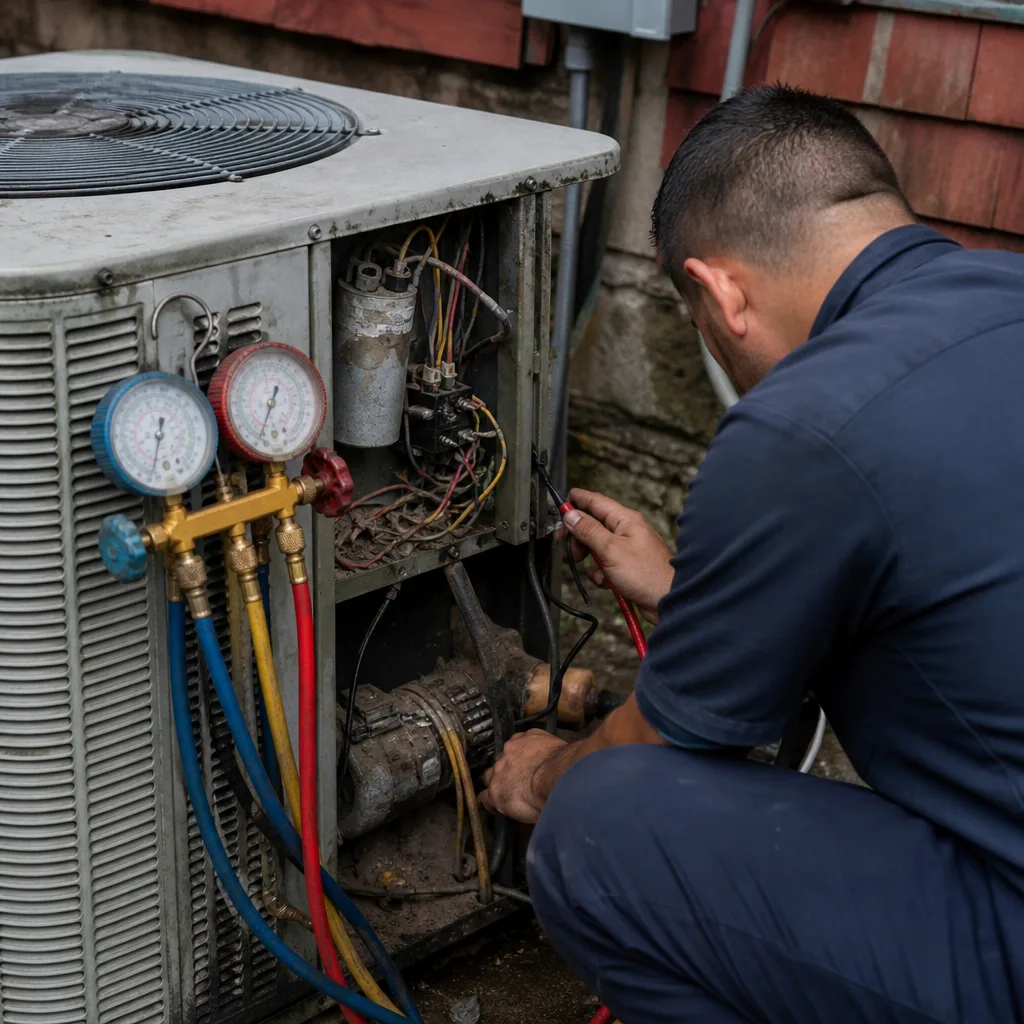 Before
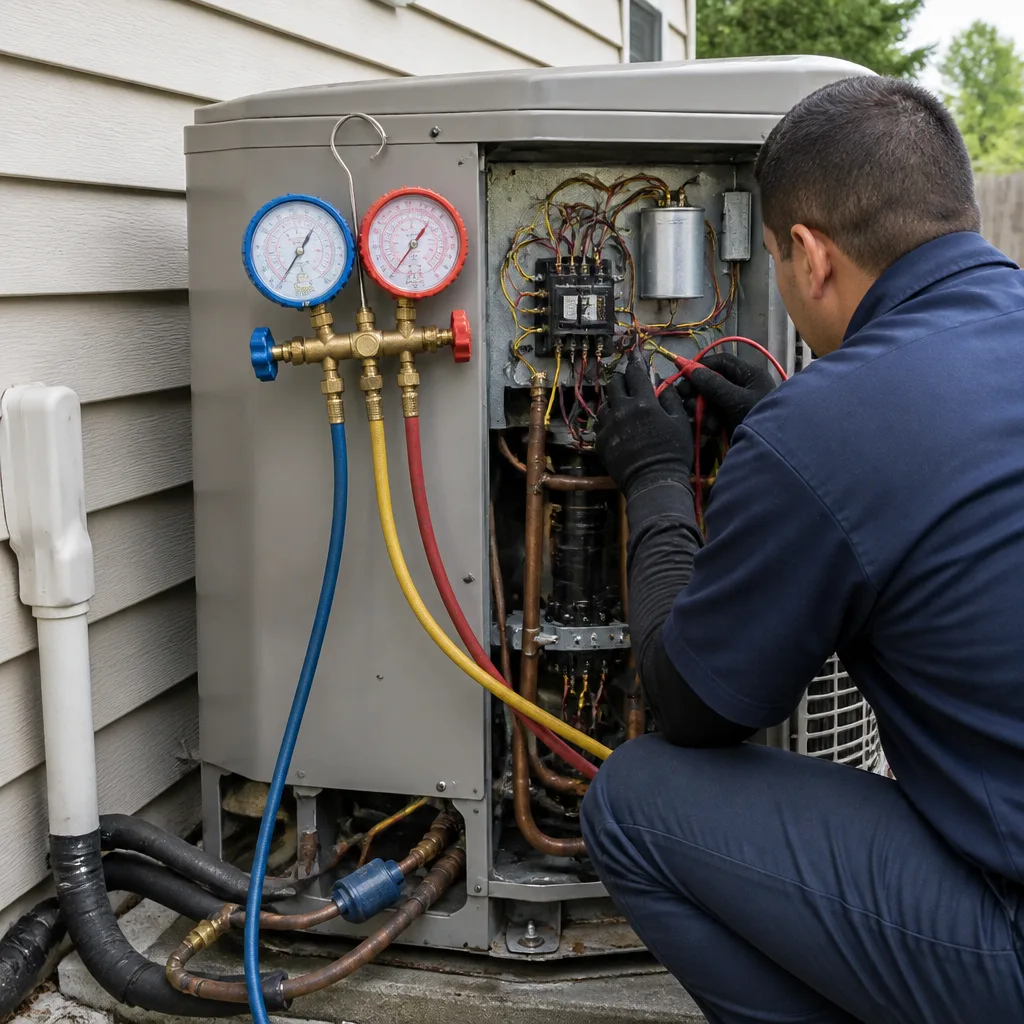 After
After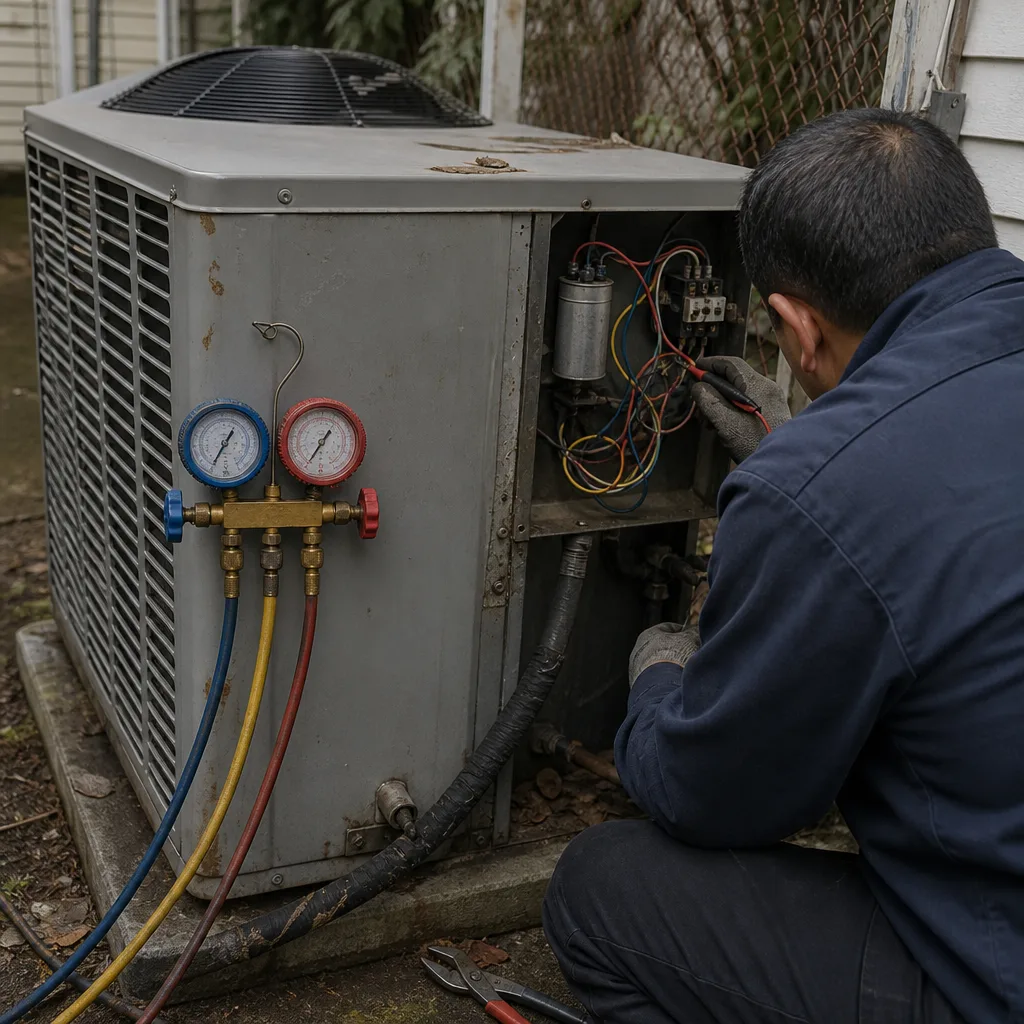 Before
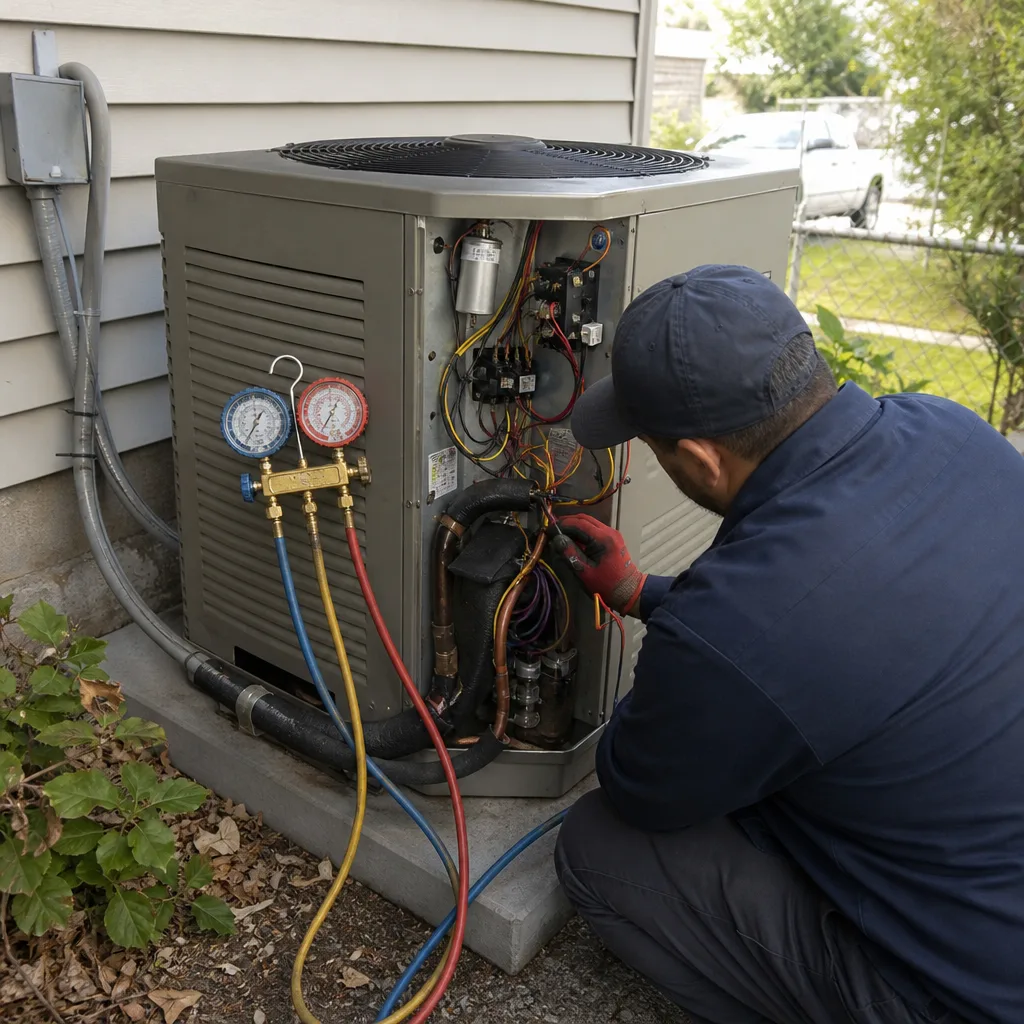 After
After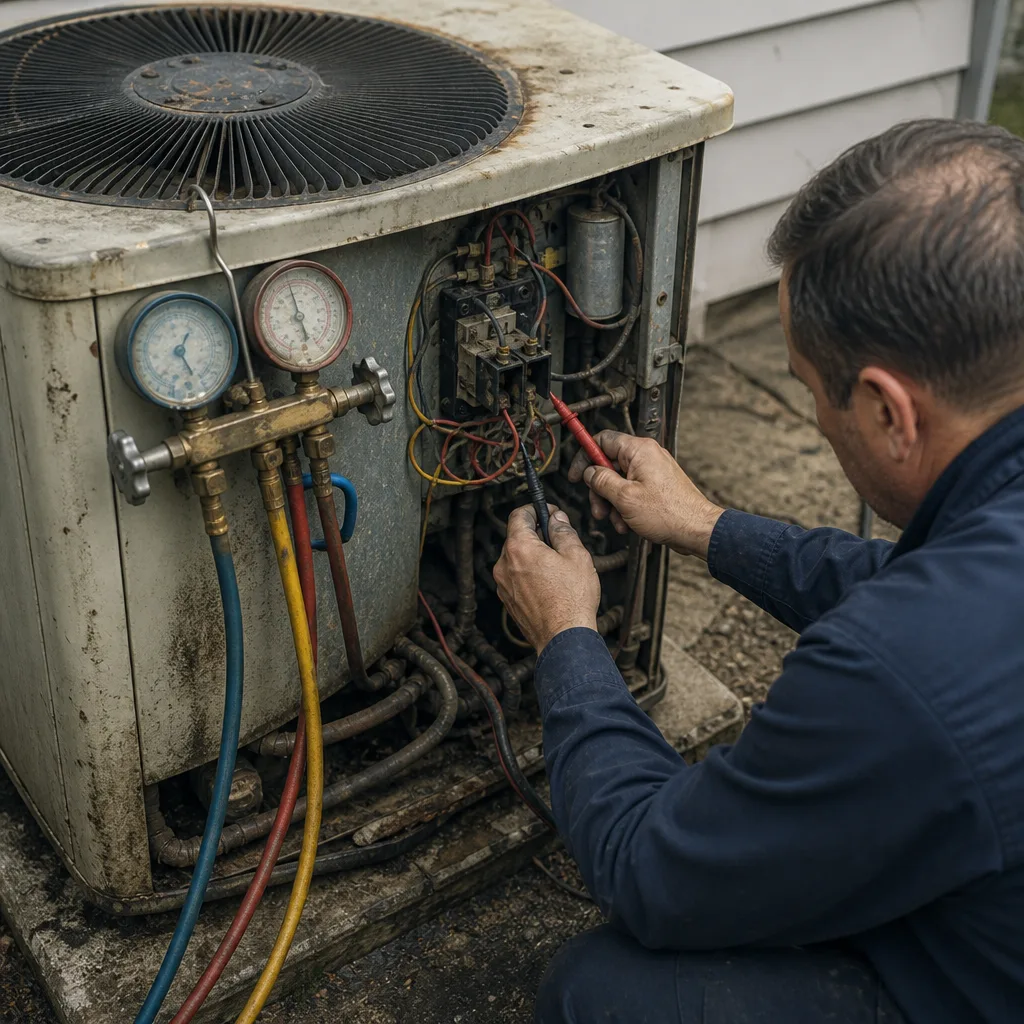 Before
 After
AfterWhen to Call a Professional
You should call a licensed HVAC contractor in Yonkers when you’re dealing with any fuel-burning equipment issue, any electrical repair inside an AC condenser or air handler, any refrigerant leak, or any system replacement. These are not DIY projects. A cracked heat exchanger on a furnace can leak carbon monoxide, and a refrigerant leak requires EPA-certified handling. If your system is blowing warm air during a Yonkers heat wave, making new noises, or short-cycling on and off every few minutes, that’s a professional call. Halden Heating and Air Yonkers offers free estimates in Yonkers. Call (838) 213-7827 and you’ll talk to a live person who can schedule a real arrival time, not a four-hour window.
Frequently Asked Questions
Most repairs run between $150 and $500, a basic central AC replacement on existing ducts runs $4,500 to $9,500, and a full heat-pump conversion can run $8,000 to $18,000 depending on whether ducts exist and how many zones you need. For an exact number on your specific home, call (838) 213-7827. Estimates are free and include a written price before any work starts.
A ductless mini-split system is almost always the right answer for pre-war Yonkers homes without ductwork. These deliver efficient cooling and heating without opening walls for ducts. A high-velocity small-duct system is a secondary option if you want the look of central air and are willing to pay for the more involved installation.
Yes, any installation involving new equipment, new ductwork, or a fuel-type change requires a permit from the Yonkers Department of Housing and Buildings. Simple repairs generally don’t, but any installation does. Your contractor should itemize the permit fee on the quote and handle the paperwork.
Con Edison offers substantial rebates for heat pump installations and smart thermostats, National Grid pays rebates for high-efficiency gas furnace replacements, and the federal government offers a tax credit of up to $2,000 on qualifying heat pumps. These stack, which means a Yonkers homeowner converting from oil to a cold-climate heat pump could see $4,000 or more in combined incentives.
In most cases, yes. Our team at Halden Heating and Air Yonkers runs same-day AC repair calls across Yonkers, and every call is answered by a live person 24 hours a day. You’ll get a written price before the work starts. Call (838) 213-7827 and we’ll give you a real arrival time.
Here’s the honest rule we use with Yonkers homeowners: if the repair costs less than 30% of the replacement cost and your system is under 12 years old, repair it. If it’s over 15 years old and the compressor or heat exchanger has failed, replacement is usually the better long-term move, especially with current rebates. We’ll walk you through the math on either path without pushing you toward the more expensive option.
The Bottom Line
Yonkers HVAC decisions are shaped by housing stock, local micro-climates, county rebates, and city permit rules. The right system for a pre-war co-op is different from the right system for a post-war colonial, and the right system for a river-level rowhouse is different from the right system for a Park Hill colonial. The key steps are knowing your home’s era, getting a proper load calculation for your specific neighborhood, taking full advantage of Con Edison and National Grid rebates, and reading your contractor’s quote line by line. For more guides & resources, explore our blog. If you’re in Yonkers and want a written price from a team that does this work every day here, call Halden Heating and Air Yonkers at (838) 213-7827. You’ll get a live person, a real appointment, and a quote you can hold us to.
Written by Andre Fuller, Owner at Halden Heating and Air Yonkers, serving Yonkers since 2004.